
I love going to the
library with E. Reading together has become one of her favorite things to do,
sometimes reading book after book, or the same book over and over! For my
sanity, that means we go to the library nearly every week (sometimes twice) to
pick out new books. Like any object I choose for her environment, I want to
make sure that it aligns with Montessori principles. Is it something that will
help her gain skills she needs for life? Is it age appropriate? Is it
beautiful? Is it the best quality?
What are the best books to choose for babies and
toddlers?
While i'm a big believer that ANY book is better than no book, I want to make sure I choose the best. Of course we want
books that are fun, easy to read, books that look new and are well cared for. But what about the quality of the content of the book? What sort of books are the best for toddlers?
Throughout my Montessori training I heard over
and over how we need to show our children the beauty in the real world around them. Not only does this teach
them about the world but helps give our children a firm footing in reality. 0-6
year olds are involved in the task self-formation, they are creating who they
are based on the world around them, so we want to make sure we give them an
accurate picture of the world they will have to navigate in.
When we teach a lesson, the rule is that we
ALWAYS show the REAL object before introducing plastic models or pictures, and
always introduce realistic pictures before illustrations.
However, when I go
to the public library to get books for my 1 1/2 year old, what do I find?
Nothing but illustrations! Many of them, I'm sorry to say, are quite poor
illustrations! They are oversimplified or cartoonish without any realism or
artistic beauty. There are definitely exceptions, but when it comes to board
books for babies and toddlers I have found myself sadly disappointed in the
number of poorly illustrated books compared to the titles with real pictures or
realistic illustrations.
It seems like the
general thinking is that babies NEED or WANT simple, cartoonish illustrations,
and it is not until they get older that there are more realistic or picture options available.
I complained to my husband about this and
asked
"Is it
just me that thinks there should be more books for babies with REAL pictures?
Or is it true that they need simple drawings? Am I the only one who cares about
this or am I being a crazy mommy?"
("crazy mommy" being a phrase I
apply to myself quite regularly, especially when I have to tell people about my
policy on sugar and tv!) He wisely shrugged his shoulders noncommittally, leaving me to do some online research. You'd
be surprised how little research has been done on the subject but I finally
found ONE study (the first sentence of the study remarking on how little
research had been done on the subject! Lol)! It was a great read and I'm
providing the link here. http://www.ncbi.nlm.nih.gov/pmc/articles/PMC2952631/
Not only did they answer my question about
which is better, picture or illustrations, they also revealed findings on their
experiments done with manipulatives in books (pull tabs, textures, pop ups) as
well as e-books!
Realistic Pictures or Cartoonish Illustrations? Which
does science say is better?
Drum roll please!
Pictures win! When it comes to learning new
words and applying those words to real life objects (a big reason why reading
with your child is so important), pictures win! The more realistic the picture,
the better the child was able to learn new vocabulary and APPLY IT to real world objects around them. The results of the
experiment were explained thusly in the article:
"the iconicity of the picture affected how well
15-month-old children extended the label to the real object; they could do so
above chance in the photographs and drawings conditions, but not in the
cartoons (least iconic) condition. Further, neither age group of children who
participated in the cartoons condition performed above chance when asked to
generalize the label to a new target exemplar. These findings show that the
iconicity of the image affected how well children transferred knowledge from
the picture book to reality."
This made so much
sense to me. It brought back memories of hearing about kids who can point to the "cow" when they were reading books (cartoonish) but when they saw
a cow in real life they called it a horse! I'm sure you've all heard of similar
stories.
 |
| cartoonish |
In our increasingly
modern world, where most of our children get limited time with nature and
animals, I feel it is more important than ever to teach them what animals and
plants are using real pictures, instead of cartoonish or poor drawings.
 |
| picture |
 |
| realistic illustration |
Simple books or
books with manipulative features? What led to better learning?
Drum roll again!
Simple wins! I was
shocked! I really was. I've always thought that for babies and toddlers, since
they learn through sensory experiences that manipulatives were best. But
according to the study, at least when it came to acquiring language, the babies and toddlers were less
likely to learn new words and label real life objects with those words when
taught with books with manipulatives.
Why is that? Well,
the explained it like this.
"Further, we found that manipulative features, which are
intended to increase young children’s engagement with picture books, led to
less learning. In particular, handling the 3-D pop-up elements on the page may
have made it difficult for children to learn about the animals featured in the
book, due to the conflict of dual
representation. This theoretical construct posits that the more salient and
concrete a symbol is itself, the more difficult it is to represent its abstract
referent (DeLoache, 1995)"
And…
"In addition to the difficulty with dual
representation, the children’s manipulation of the flaps and pull-tabs on the
page might have increased their cognitive load such that they could not
additionally process what the adult was saying about the content of the book.
Thus, because it did not have such distracting elements and had more detailed
images, learning labels and facts from the Realistic book may have been an
easier task."
So basically two
reasons that learning new words from books with manipulatives is harder.
"dual representation" and "increased cognitive load". Which
makes sense. Imaging, you are learning the word "pink" for the first time, and the book says "touch the flamingos pink feathers". The word pink is an abstract concept, but they are putting it in the context of touching something concrete. So confusing! Also, the "increased
cognitive load" basically means they are way too busy pulling and flipping and feeling all the
cool things to even care what it is you're talking about. There's just too many
distractions.
The one exception I
see to this is that I assume that if you are specifically teaching the child
the names of TEXTURES then those touch-and-feel books are definitely the way to
go. There is no dual representation there. So if you want to teach the child the
word "rough" and "smooth" and "bumpy", go for
it. However, I think that if you want
your child to practice fine motor tasks such as flipping panels and flaps or
pulling levers or feeling different textures, you may want to consider getting
those experiences with different materials, in order to provide a richer
sensorial experience. For me, I'd rather
have sensorial experiences be out in the real world with real objects, and keep
my books for language acquisition. Remember, in Montessori it is important to
isolate a learning material to teach only one concept at a time (at this age
group).
Does this mean I'm throwing away all my books with pull tabs, textures and cartoonish illustrations? No way! She loves them and they entertain her quite a bit! But this does mean I'm going to be more careful about having a good balance of BOTH, and I need to make sure that when I'm introducing a new concept to her that I always show the REAL THING FIRST!
Books are wonderful. Read read read read with your kids! Then read some more! Finding books with photographs can be tricky at this age group (something I have a mind to fix!) but if you can't find any, try to find the books with the most realistic, beautiful illustrations you can.
And since finding board books that are baby-toddler proof can be so difficult, E and I have been venturing into the paper non-fiction section in the children's library. So far, she hasn't ripped a single page. *fingers crossed*. Your toddler might be ready for paper books sooner than you think.
Our Mom and Toddler
Approved Books with
Real Pictures!
We LOVE
the "Picture This" series. They have some of the most beautiful
pictures. They are great for starting conversations.
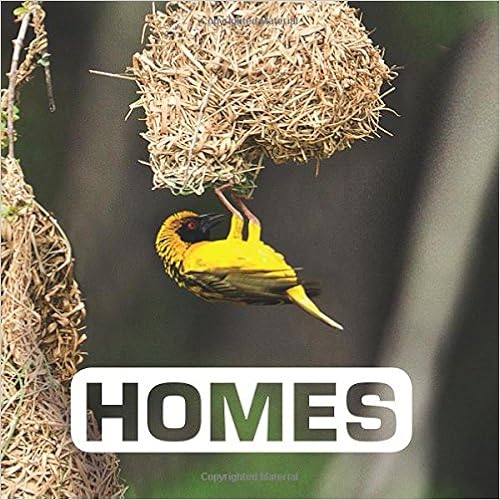

We also like the
"National Geographic: Little Kids" Board Books

That's all for
today! Leave a comment. What are your favorite books for babies and toddlers
with realistic images?

No comments:
Post a Comment