Wednesday, November 25, 2015

What Books Are Best for Babies and Toddlers?


I love going to the library with E. Reading together has become one of her favorite things to do, sometimes reading book after book, or the same book over and over! For my sanity, that means we go to the library nearly every week (sometimes twice) to pick out new books. Like any object I choose for her environment, I want to make sure that it aligns with Montessori principles. Is it something that will help her gain skills she needs for life? Is it age appropriate? Is it beautiful? Is it the best quality?

What are the best books to choose for babies and toddlers?

While i'm a big believer that ANY book is better than no book, I want to make sure I choose the best. Of course we want books that are fun, easy to read, books that look new and are well cared for. But what about the quality of the content of the book? What sort of books are the best for toddlers?

 Throughout my Montessori training I heard over and over how we need to show our children the beauty in the real  world around them. Not only does this teach them about the world but helps give our children a firm footing in reality. 0-6 year olds are involved in the task self-formation, they are creating who they are based on the world around them, so we want to make sure we give them an accurate picture of the world they will have to navigate in.

 When we teach a lesson, the rule is that we ALWAYS show the REAL object before introducing plastic models or pictures, and always introduce realistic pictures before illustrations.

However, when I go to the public library to get books for my 1 1/2 year old, what do I find? Nothing but illustrations! Many of them, I'm sorry to say, are quite poor illustrations! They are oversimplified or cartoonish without any realism or artistic beauty. There are definitely exceptions, but when it comes to board books for babies and toddlers I have found myself sadly disappointed in the number of poorly illustrated books compared to the titles with real pictures or realistic illustrations. 

It seems like the general thinking is that babies NEED or WANT simple, cartoonish illustrations, and it is not until they get older that there are more realistic or picture options available.


  I complained to my husband about this and asked

 "Is it just me that thinks there should be more books for babies with REAL pictures? Or is it true that they need simple drawings? Am I the only one who cares about this or am I being a crazy mommy?"

 ("crazy mommy" being a phrase I apply to myself quite regularly, especially when I have to tell people about my policy on sugar and tv!) He wisely shrugged his shoulders noncommittally,  leaving me to do some online research. You'd be surprised how little research has been done on the subject but I finally found ONE study (the first sentence of the study remarking on how little research had been done on the subject! Lol)! It was a great read and I'm providing the link here. http://www.ncbi.nlm.nih.gov/pmc/articles/PMC2952631/

 Not only did they answer my question about which is better, picture or illustrations, they also revealed findings on their experiments done with manipulatives in books (pull tabs, textures, pop ups) as well as e-books!


Realistic Pictures or Cartoonish Illustrations? Which does science say is better?

Drum roll please!

Pictures win! When it comes to learning new words and applying those words to real life objects (a big reason why reading with your child is so important), pictures win! The more realistic the picture, the better the child was able to learn new vocabulary and APPLY IT to real world objects around them. The results of the experiment were explained thusly in the article:

"the iconicity of the picture affected how well 15-month-old children extended the label to the real object; they could do so above chance in the photographs and drawings conditions, but not in the cartoons (least iconic) condition. Further, neither age group of children who participated in the cartoons condition performed above chance when asked to generalize the label to a new target exemplar. These findings show that the iconicity of the image affected how well children transferred knowledge from the picture book to reality."

This made so much sense to me. It brought back memories of hearing about kids who can point to the "cow" when they were reading books (cartoonish) but when they saw a cow in real life they called it a horse! I'm sure you've all heard of similar stories.

Image result for bird clipart
cartoonish
In our increasingly modern world, where most of our children get limited time with nature and animals, I feel it is more important than ever to teach them what animals and plants are using real pictures, instead of cartoonish or poor drawings.
Image result for bird
picture
realistic illustration


 Simple books or books with manipulative features? What led to better learning?


Drum roll again!


Simple wins! I was shocked! I really was. I've always thought that for babies and toddlers, since they learn through sensory experiences that manipulatives were best. But according to the study, at least when it came to acquiring  language, the babies and toddlers were less likely to learn new words and label real life objects with those words when taught with books with manipulatives.

Why is that? Well, the explained it like this.

"Further, we found that manipulative features, which are intended to increase young children’s engagement with picture books, led to less learning. In particular, handling the 3-D pop-up elements on the page may have made it difficult for children to learn about the animals featured in the book, due to the conflict of dual representation. This theoretical construct posits that the more salient and concrete a symbol is itself, the more difficult it is to represent its abstract referent (DeLoache, 1995)"


And…

"In addition to the difficulty with dual representation, the children’s manipulation of the flaps and pull-tabs on the page might have increased their cognitive load such that they could not additionally process what the adult was saying about the content of the book. Thus, because it did not have such distracting elements and had more detailed images, learning labels and facts from the Realistic book may have been an easier task."


So basically two reasons that learning new words from books with manipulatives is harder. "dual representation" and "increased cognitive load". Which makes sense. Imaging, you are learning the word "pink" for the first time, and the book says "touch the flamingos pink feathers". The word pink is an abstract concept, but they are putting it in the context of touching something concrete. So confusing!  Also, the "increased cognitive load" basically means they are way too  busy pulling and flipping and feeling all the cool things to even care what it is you're talking about. There's just too many distractions.

The one exception I see to this is that I assume that if you are specifically teaching the child the names of TEXTURES then those touch-and-feel books are definitely the way to go. There is no dual representation there. So if you want to teach the child the word "rough" and "smooth" and "bumpy", go for it.  However, I think that if you want your child to practice fine motor tasks such as flipping panels and flaps or pulling levers or feeling different textures, you may want to consider getting those experiences with different materials, in order to provide a richer sensorial experience.  For me, I'd rather have sensorial experiences be out in the real world with real objects, and keep my books for language acquisition. Remember, in Montessori it is important to isolate a learning material to teach only one concept at a time (at this age group).


Does this mean I'm throwing away all my books with pull tabs, textures and cartoonish illustrations? No way! She loves them and they entertain her quite a bit! But this does mean I'm going to be more careful about having a good balance of BOTH, and I need to make sure that when I'm introducing a new concept to her that I always show the REAL THING FIRST!


Books are wonderful. Read read read read with your kids! Then read some more! Finding books with photographs can be tricky at this age group (something I have a mind to fix!) but if you can't find any, try to find the books with the most realistic, beautiful illustrations you can.

And since finding board books that are baby-toddler proof can be so difficult, E and I have been venturing into the paper non-fiction section in the children's library. So far, she hasn't ripped a single page. *fingers crossed*. Your toddler might be ready for paper books sooner than you think. 


      Our Mom and Toddler Approved Books with
                 Real Pictures!
We LOVE the "Picture This" series. They have some of the most beautiful pictures. They are great for starting conversations.
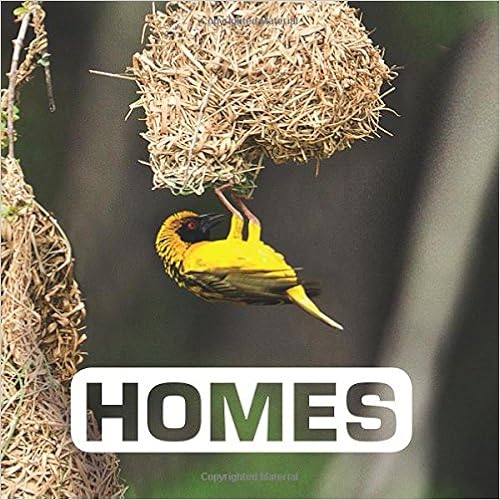


We also like the "National Geographic: Little Kids" Board Books


That's all for today! Leave a comment. What are your favorite books for babies and toddlers with realistic images?

Thursday, November 19, 2015

Beyond Punishment and Reward

So I have been asked by a lot of people in response to my last blog Punished by Rewards  “So rewards don’t work? What DOES?”
This is a totally understandable question, but kind of a trick question. Much like the Chesire cat responding to Alice asking “Which way should I go?”,  my response would be,
“Well, that depends on what you are trying to accomplish?”

Rewards have been used to get kids to read, do their homework, get better grades, obey instructions, be nice, share, eat their vegetables, the list goes on and on. I could do a separate blog post for each one of these problems, and suggest 100 articles for each one as well!
 However, I feel like the real question parents are asking is " How do I help my child be a successful, independent person?" How we get here (the promised land!) contains many hurdles, struggles  and obstacles. We tend to call these learning opportunities “behavioral problems”. Dealing with these problems day in and day out without resorting to reward or punishment can be tricky.
It basically all comes down to this: Do you want to constantly have to control your child, or do you want your child to develop the capacity to control themselves?

How can we reduce behavioral issues and help my child become a successful adult?
What if I told you that the answer to this question, is “Give your child more freedom?”
giving a child freedom does NOT mean letting them
do whatever they want! 
Before you roll your eyes and shrug me off as CLEARLY a lunatic; Let me explain. I don’t mean “let them run wild and do whatever they want!”. This is NOT freedom. A child who lacks impulse control, concentration and focus cannot follow even her own inner will, and is pulled like a leaf in the wind from one activity to the next, driven by OUTER STIMULUS. By true freedom, we mean that the child has cultivated their own power of focus, and concentration and discipline so that they can follow their own inner voice and has developed the capacity and the desire to listen and obey directions from others. This is a free person.

How do we help our children develop this ability? It all comes down to discipline and freedom. Namely, giving freedom to obtain discipline. Usually we think of it backwards. Once a child has shown they are disciplined enough, we give them freedom (as a reward). However, according to the Montessori philosophy, just as a child cannot learn to walk without the freedom to move around, children also cannot develop the capacity for discipline, without the freedom to exercise and practice it.

I have had so many eye opening experiences where I took something I thought was a 'behavioral problem" and forced myself to see it as a "cry for freedom" and realized that it was! Example, allowing my daughter E to feed herself has stopped so many dinner time tantrums. Yes, it's messy. However, E is working so hard to become an independent person, her inner guide is calling out to her "You need to learn to feed yourself! Practice!" it's so important we let our children listen to that inner guide and develop those important skills.

Montessori said that discipline came about through the practical life exercises (like feeding yourself!). These exercises are specifically designed to help the child develop concentration and focus. Without concentration and focus, discipline cannot occur. This is why in Montessori classrooms we allow children to choose freely what work they want to focus on, and we never interrupt a child who is busy with a task.


How to give children the freedom to learn how to control themselves so that you don’t have to

One of the best philosophies I've heard of on dealing with difficult behaviors in children was presented at an AMS Conference called Liberty & Discipline: The Eternal Quest for Balance. The speaker blew me away and forever changed how I deal with behavioral problems in my home and classroom.
She challenged us to see every behavioral issue as the child’s cry for freedom. Remember, the 0-6 child is on a quest to become a person. They are in the process of self –formation and creation. They want, NEED, to be independent. And to do this takes a lot of practice. They don’t have ready-made abilities, they have to create them and perfect them.  

Dr. Montessori said that:

"The arrival of 'discipline' , which sprang up spontaneously… discipline in freedom seemed to solve a problem which had hitherto seemed insoluble. The answer lay in obtaining discipline by giving freedom."

She is describing exactly what happens when you give the child the freedom to practice skills and solve problems on their own. They form their own discipline, so that you don’t have to discipline them.  Does this mean step back and do nothing? Letting the child run wild? Letting a child be dangerous or rude? Of course not. Remember,  Montessori also said:

"To let the child do as he likes when he has not yet developed any power of control is to betray the idea of freedom. The result is children who are disorderly because previously order had been enforced. Real freedom is a consequence of development"

She is describing here that letting someone who has not yet developed the capacity to control themselves do whatever they want does not help them to learn to control themselves. We have to carefully present them with opportunities to DEVELOP that power. Just like telling a baby “you are free to walk to the store” not only puts the baby in danger, but it doesn’t help them develop the capacity to walk. However, neither does putting the baby in a stroller and NEVER allowing them to move and strengthen their muscles help to teach them how to walk. A baby has an inner guide that teaches  and urges them to do exactly what they need to do to develop that power, as long as we adults give them the freedom to move about freely in a SAFE environment.

In this same way, we need to present children with opportunities to listen and follow that inner guide who will help them to develop their inner-will. Just like a baby learning to walk, this process happens NATURALLY and SPONTANEOUSLY as long as we give them the freedom to practice in a SAFE environment.  Just like learning to walk, inner-discipline WILL develop in a child, and while we cannot MAKE this occur any faster than is right for that child, we CAN do things to STOP it, or slow it down. We inadvertently do this by constantly controlling our children, never allowing them the opportunity to make their own choices or do things independently. Being FORCED to obey someone does not facilitate true discipline. "breaking" a child's will and substituting it for our own is not the goal, we want to help the child develop his own will, then he will have the ability to freely choose to listen to ours as well.


Aside from allowing children ample time to focus on the spontaneous work they choose (practical life activities), how do we address behavior problems that need immediate attention? The same speaker at the AMS conference presented a 3 step formula for ending behavioral problems naturally and helping children develop their own discipline.


The 3 Step Formula

The three steps are easy, we  first look to the environment, then the child, then ourselves.

Montessori said that the child's first and foremost teacher is the environment they are in. We simply prepare the environment. Their experiences within their unique environments are literally shaping who they are. So when solving a difficult behavior problem, it could be as easy as making a tiny change in the environment.  I have found that if I make a small change in the environment, I usually don't have to take the next two steps! Let alone have to punish or reward to get the behavior I want I mean, allow the child to develop their own discipline.

Let me give an example:
Students in my classroom were having a hard time not running in class. 1.) I looked to the environment and saw that I had wide open spaces that just begged to be run through. I did a little creative redecorating and made it more difficult to run. The children naturally began having to walk carefully so that they wouldn’t run into shelves and furniture. Just as we allow the child to learn that 1 is smaller than 10 by using the red rod materials, we allowed our children to learn naturally from the constraints of the environment that running wasn’t feasible inside.

While this solved the problem for a majority of students, I did notice that a few students were still running. The next morning I asked those children if they would join me for a lesson. I asked them to walk carefully on a line of tape, or through our maze, or to walk around the mats while carrying a bell and try not to make a sound. I chose these lessons because I noticed these particular children had not yet developed the capacity to tell themselves “slow down and walk in class”. They were not FREE to choose for themselves. By making the lesson interesting, we were giving them extra incentive to practice this skill, thereby giving them the option to choose walk or run, and developing the power to say “I know we walk in class, and now I have the POWER to CHOOSE to walk, even if I WANT to run”. This is freedom, being able to choose, regardless of flighty impulses. Otherwise, the children are captives of their impulses.

Every now and then, I would STILL see some children running. On times like that, I would have to look at myself. “Oh, that’s right” I would recall, “I did rush through the classroom to stop “jimmy” from peeing in the sink”. And I would make a conscious effort to walk through the classroom slower than it takes for a new Sherlock series to air, and before long my kids were doing the same.


Let me just give one more example, one that the speaker shared.
  
For example, a child in her class was constantly bothering his peers who were trying to work, kicking their feet under the table. She tried making changes to the environment, but it didn't seem to help. This student was STILL bothering his classmates. She quietly asked him to come to her, away from the others, and asked.  "I see that you are kicking your friend's feet under the table. Tell me, what do you want?"

She said that this little question What do you WANT, had helped her solve more problems than any other technique.

"I don't know"

Don't we always run into the dreaded "I don't know"? Resist the temptation to stop here, or TELL the child what it is you think they want. The truth is, most children just need more time to feel out their response. So this is a genius phrase to use:

"if you did know, what would you say you wanted?"

"well….i guess…I want them to be my friend"

Now ask them if what they were doing is helping them to get what they wanted.

"oh I see. Is kicking their feet helping you get them to be your friend?"

The child admitted that no, it didn't seem to be working. So what did this amazing teacher do? She had a lesson with him. Not a punishment. Not a time out. She taught him. She had a grace and courtesy lesson on inviting someone to work with you. Do you see how teaching this child to handle problems in an appropriate way freed him? Just like a child who cannot yet choose not to run inside is not a FREE child (they are a slave to their impulses) this child, who did not YET know how to be peaceful, what similarly a slave to his ignorance. When we teach children to obtain their own discipline by giving them the opportunity and freedom to practice important skills, we are preparing them for a life of true freedom.


One of my favorite quotes is:

"If a child doesn't know how to read, we teach. If a child doesn't know how to swim, we teach. If a child doesn’t know how to multiply, we teach. If a child doesn't know how to behave, we…..punish?"
-Herner 1988


I love this quote so much! So, when we see that child that is not YET "there" (the promised land of self-discipline) let’s ask ourselves. “In what way are they asking for freedom?” and “Can I TEACH them something here that can set them free?”.