Oh no! Did I pick the wrong book?
 "Peter gave himself up for lost!" I read to my daughter one night. "and shed BIG TEARS" I added dramatically. I was quite pleased with my reading, showering the words with lots of emotion....but maybe I had overdone it. As I said the word "tears", my 2 year old daughter burst into sobs!
"It's ok, It's ok! Don't cry" I panicked! We stopped reading the book, because it was "too scary". But to my surprise, E asked to read it again and again and again. We read it almost every night for a few weeks. She never did cry the same way she did at first, but there were a few whimpers occasionally.
Reading sad books give children practice in developing empathy, and talking about difficult emotions.
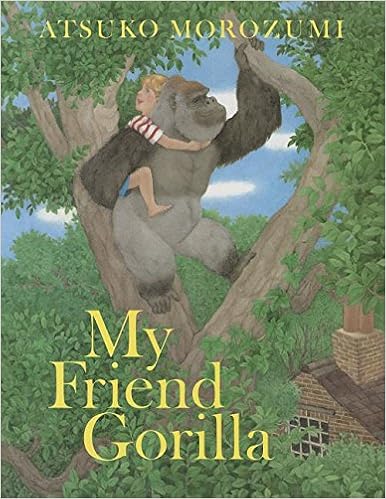
After the Peter Rabbit incident, I was reading the book "My Friend Gorilla". I got to the page where Gorilla has to go back to Africa, and I admit, got a little teary. It was sad! I ask E about the pictures after I'm done reading, to give her a chance to voice her ideas and feelings about the book. The little boy in the picture was crying and I asked "How do you think the boy feels?"."He feels sad....I feel sad too!" and with that she starts to cry great big tears. I didn't panic this time as I did with "Peter Rabbit". I had come to realize that E needs these experiences to help her navigate the great big sea of emotion that is being 2, and human!
What I had just witnessed was not something I needed to fix or rescue her from, what I had witnessed was a wonderful example of empathy. She was feeling for another person who had suffered a loss. She could imagine how painful that would feel and was feeling it with them.
"It is sad isn't it? They were good friends. It's ok to be sad when a friend leaves. Would you like to read more, to see what happens?" i asked She agreed and we read on. Immediately upon finishing the book, she asked to read it again, and again. 3 times in all. Just like Peter Rabbit, this has become a favorite book.
Life is complicated, scary and yes, sometimes sad. Kids know this already, so why are we trying to hide it from them?
I have become a big proponent of reading sad books to young children. Books offer a safe space to explore scary, complex and difficult emotions and scenarios. A place where they can talk about it with you, and see how characters handle their problems. It develops empathy and compassion. The book "The Dead Bird" is a wonderful example of how a sad book can be a safe place to talk about the complexity of life.
While at a nature preserve, my daughter and I came across a dead bird. I couldn't help but exclaim, "Oh no! It's dead, poor thing." E was watching me closely and went to examine the thing that had caused such a fuss, and when I told her not to touch it she became very upset and began to cry. The entire day she asked over and over "What happened to the bird? What happened?"
The next day at the library I found "The Dead Bird" and after some inner debate, I got it. She didn't cry during this book, but the children's treatment of the dead bird fascinated her, and this became yet another favorite.
It's Ok to feel sad sometimes....
Reading sad books to children, and giving them the freedom to feel sadness without immediately trying to cheer them up teaches children that sadness is a common emotion that needs to be acknowledged, treated with respect and dealt with. Sadness is not something that can be avoided in this life, but at the same time, it won't last forever. In fact, it teaches them that not only sadness is a temporary emotion, but so is happiness. So many of us think that our children (and ourselves) should be bubbling fountains of happiness and joy 24/7. This is neither realistic nor advisable. Only crazy people are happy all the time. Happiness is a guide post, an emotion that helps direct our life. It's not a sustainable permanent condition. That's something more like peace, or contentment. Sadness is another guide post emotion, and some psychologists think that sadness evolved to help us get the help we needed from our tribe. When things aren't going well for us, we get sad, why? Because someone who is sad is more approachable than someone who is angry. I think it's time we stop being afraid of sad, and see it as a necessary adaptation, like opposable thumbs. So crack open a sad book with you kid, get a box of tissues, and get ready for some feels.
What are your favorite sad children's book?
