Monday, December 12, 2016

Why You Should Read Sad Books to Your Kids


Oh no! Did I pick the wrong book?


Image result for peter rabbit stuck in the net "Peter gave himself up for lost!" I read to my daughter one night. "and shed BIG TEARS" I added dramatically. I was quite pleased with my reading, showering the words with lots of emotion....but maybe I had overdone it. As I said the word "tears", my 2 year old daughter burst into sobs!
 "It's ok, It's ok! Don't cry" I panicked! We stopped reading the book, because it was "too scary". But to my surprise, E asked to read it again and again and again. We read it almost every night for a few weeks. She never did cry the same way she did at first, but there were a few whimpers occasionally.


Reading sad books give children practice in developing empathy, and talking about difficult emotions.

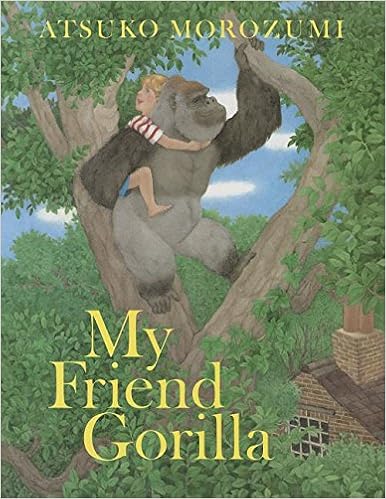
After the Peter Rabbit incident, I was reading the book "My Friend Gorilla". I got to the page where Gorilla has to go back to Africa, and I admit, got a little teary. It was sad! I ask E about the pictures after I'm done reading, to give her a chance to voice her ideas and feelings about the book. The little boy in the picture was crying and I asked "How do you think the boy feels?".

"He feels sad....I feel sad too!" and with that she starts to cry great big tears. I didn't panic this time as I did with "Peter Rabbit". I had come to realize that E needs these experiences to help her navigate the great big sea of emotion that is being 2, and human!

What I had just witnessed was not something I needed to fix or rescue her from, what I had witnessed was a wonderful example of empathy. She was feeling for another person who had suffered a loss. She could imagine how painful that would feel and was feeling it with them. 

"It is sad isn't it? They were good friends. It's ok to be sad when a friend leaves. Would you like to read more, to see what happens?" i asked She agreed and we read on. Immediately upon finishing the book, she asked to read it again, and again. 3 times in all. Just like Peter Rabbit, this has become a favorite book.


Product Details

Life is complicated, scary and yes, sometimes sad. Kids know this already, so why are we trying to hide it from them?


I have become a big proponent of reading sad books to young children. Books offer a safe space to explore scary, complex and difficult emotions and scenarios. A place where they can talk about it with you, and see how characters handle their problems. It develops empathy and compassion. The book "The Dead Bird" is a wonderful example of how a sad book can be a safe place to talk about the complexity of life.

While at a nature preserve, my daughter and I came across a dead bird. I couldn't help but exclaim, "Oh no! It's dead, poor thing." E was watching me closely and went to examine the thing that had caused such a fuss, and when I told her not to touch it she became very upset and began to cry. The entire day she asked over and over "What happened to the bird? What happened?"

The next day at the library I found "The Dead Bird" and after some inner debate, I got it. She didn't cry during this book, but the children's treatment of the dead bird fascinated her, and this became yet another favorite.

It's Ok to feel sad sometimes....


Reading sad books to children, and giving them the freedom to feel sadness without immediately trying to cheer them up teaches children that sadness is a common emotion that needs to be acknowledged, treated with respect and dealt with. Sadness is not something that can be avoided in this life,  but at the same time, it won't last forever. In fact, it teaches them that not only sadness is a temporary emotion, but so is happiness. So many of us think that our children (and ourselves) should be bubbling fountains of happiness and joy 24/7. This is neither realistic nor advisable. Only crazy people are happy all the time. Happiness is a guide post, an emotion that helps direct our life. It's not a sustainable permanent condition. That's something more like peace, or contentment. Sadness is another guide post emotion, and some psychologists think that sadness evolved to help us get the help we needed from our tribe. When things aren't going well for us, we get sad, why? Because someone who is sad is more approachable than someone who is angry. I think it's time we stop being afraid of sad, and see it as a necessary adaptation, like opposable thumbs. So crack open a sad book with you kid, get a box of tissues, and get ready for some feels.


What are your favorite sad children's book?

Friday, September 23, 2016

Bring the Beauty of the Beach Home with Montessori and the importance of PROCESS over PRODUCT


Vacation Time!


We recently took our annual family vacation to the beach. It is my favorite place in the whole world. I'd rather stay in a shack on the beach that a mansion probably anywhere else in the world (unless they had a beach nearby). Thankfully, we didn't have to stay in a shack, but you get my point.

I love the beach not only for it's beauty and the fun we have but because I love the opportunity it gives E to be out in nature. Living in Las Vegas, you have to be extremely heat tolerant to spend any significant time outside, and in the summer with temperatures as high as 115 even the most hardy among us can't stand to be out!

The Beach as a Teacher 


Nature is such a wonderful teacher. I honestly believe that a Montessori indoor classroom is only second best to letting kids be outdoors. Not only are there animals to learn about (sand crabs and pinching craps and royal terns and seagulls and sand pipers and sea lions and sea shells!), but weather patterns (how the fog would come in in the evening and burn off in the afternoon, the tides would come in and out) and geographical (tide pools and cliffs and rocks) and botanical phenomena (sea weed and kelp and sea grass and palm trees), there are cause and effects to learn about (the waves come in and out, the hole I dug fills with water, the castle I built gets knocked down by the waves) and risk assessment (how long can I stand here before a wave knocks me down? How high can I build this rock tower? should I touch that sand crab?).

Elia observing the sand crabs we caught


"This is our mission: giving children  the opportunity to stir up life and leave it free to discover" - Maria Montessori


Not only are all these things begging to be learnt about at the beach, but there's a magic about being outside that allows us as adults to LET GO and GET OUT OF THE WAY. When you're indoors you're always worried about things getting knocked over, spilled, broken, etc. But when you're outside? No worries! Play in the sand! Get wet! The richest learning takes place in my opinion not only because it's so rich and diverse and engages the whole body and all the senses, but because us adults aren't always having  heart attack about messes and we leave the children free to discover.

We left the beach but the beach didn't leave us!

So after our week long stay at the beach I was literally having a panic about how I was going to bring this beauty back with us to dreary hot and dry Las Vegas. I came up with a few ideas I'd like to share with you.

While at the beach I was struck by how many beautifully colored rocks I found in the surf, only to be disappointed by how dull they looked once they had been taken out of the water and dried off, it was is they had become sad after being removed from their beachy home (kinda like how I felt going back to Las Vegas). I wondered how I could return their beauty to them, and came up with rock washing!
Before a wash                                                                                        After a bath


E and her cousin looooooove this job. They have such a peaceful zen-like nature about them when they wash things, they take such care and attention. And they become very excited and pleased to see the rocks change color! It's like ocean magic!

A towel to soak up water for washing the rock on, a tupperware for water, one for the sponge


"As soon as children find something that interests them, they lose their instability and learn to concentrate"
Maria Montessori


Besides boogie boarding, laying in the sand and eating fresh fish and chips, my favorite thing to do at the beach is to collect sea shells I find in the sand. I saved nearly everyone I found, even the broken ones. I just can't resist. I thought I'd make a basket full of them where the kids could examine them. But I realized that the fun about sea shells is the discovery. Seeing a tiny speck of white in the sand and digging it up, not knowing if it will be whole and perfect or a interesting fragment full of possibility of what it might have been. So, much to the amusement of my husband and relatives, I packed as much beach sand as I could into a container and made this sea shell discovering box out of an old plastic bin. I let them use it OUTSIDE, and yes, I freak out every time a drop of sand is spilled but I try not to let it show. I just show them how to keep their hands IN the box, and keep a dustpan handy for them to clean up their spills. (see, this is why nature is the best! everything artificial is second best!)


Also in our collection is seashell washing.


Also, I found a ton of these flat black rocks at the beach and painted eyes, mouths, and noses so they can create faces. Just another example of how nature can help you become more creative! I loved how some of the rocks had the shapes of noses and mouths already!


                                Process, Not Product

Observing E  at play at the beach also reminded me of a VERY important topic. Process over product. 

I was helping E build sandcastles (at least that's what I thought I was doing). We'd work diligently to fill up her bucket of sand, and I'd flip it over to make the most beautiful and perfect sand castle. 
What did my daughter do with all our hard work? Our beautiful sand castle? She promptly took huge handfuls of it so she could put it BACK in the bucket so she could do it again! She crushed my dreams of having a huge and populous sandcastle city!


"She wasn't in the process of 
constructing a sandcastle, 
she was in the process of
 constructing HERSELF."


I wanted to stop her and show her what I had in mind, how beautiful our sandcastles could be if only she stopped destroying them! But I stopped myself. E was showing me that it was the process that was important to her, not the product. You see, it's during the PROCESS of building a sand castle that she learns the important skills of grasping sand or holding a shovel, aiming the sand into the bucket. Endurance and concentration to stick with the task until the bucket is full. It's not the product of the finished sand castle that interests here at ALL, Why not? Because SHE herself is the product, she is in the process of creating herself. And she is the most lovely sandcastle I ever did see. 


I hope you enjoyed this post. Please feel free to comment below on  how nature teaches your children, how do you bring nature home? Where do you see process over product?

Saturday, May 21, 2016

The Benefits of Teaching Your Baby to Sign (that you never thought about!)

E is nearly 2 years old! And around 4 months ago she started REALLY talking, I mean, full sentences! It was just *poof* out of nowhere here monosyllabic utterances turned into sentences. As a proud momma I have to share her profoundly beautiful first sentence:

"I want cheese!"


Isn't that beautiful? Lol.

Anyway, ever since she started talking I've been thinking about our experience with sign language and wondered what effects signing had on her acquisition of verbal English.

A little background. E started signing around 10 months old. I signed with her very early on, but she didn't do her first sign until then. (first sign if you are curious was "milk"). After the first sign clicked, she signed all the time, and only needed to be shown a new sign once or twice before she had mastered it. Signing proved to be a wonderful experience.

The benefits of signing are pretty well known, a better bond with baby, better communication, less tantrums and contrary to popular beleif- babies who sign actually talk sooner, and have a better vocabulary and use longer sentences (I am definitely seeing this with E)!

While I was recollecting on our signing experience together, I considered some other benefits of signing that you probably never thought of!

Benefits of Signing-bet you didn't think of these!


1.) Better motor skills
Sign language requires some pretty advanced use of your hands and fine motor skills. In order to be understood, you have to do the sign more or less correctly. (E and most babies who sign have their own unique "style" but you'll learn the way your baby signs pretty quickly) Constantly learning new ways to use her hands gave E great dexterity.

2.) Better control over emotions
I firmly believe that signing helped E to be a more emotionally stable child. there are 3 reasons for this.

 1.) signing let her tell me exactly what she wanted, so I was able to respond quickly to her needs. this made it so she didn't have to scream cry and yell in frustration for mommy to get her a banana. 

2.) I taught her the signs for "happy", "sad", "scared", "mad". Psychology tells us that simply LABELING an emotion is a HUGE step in taking the power (and for small children, oftentimes the scary-ness) of the emotion away and being able to deal with it.   
          There would be times when something scared E and she'd start to cry. All I had to do was ask her, "Are you scared? Say 'I'm scared!'".  She would sign "scared" and IMMEDIATELY stop crying. It was a miracle!!!

3.)Fear of the unknown is probably one of the oldest fears, and starts at a very young age. There would be times that seeing an unfamiliar bug, animal or sound would scare E. When this happened, I would show her the sign (bug, spider, thunder, vacuum, etc) and she would calm down. for some reason, showing her the SIGN as opposed to just saying the word made her calm down. She would sign it back and nod like "oh, this thing has a name. I can name it. it's not scary". 

3.) A more creative understanding of expression and language
From a very early age, signing and talking to your child teaches them that there is more than one way to express yourself. More than one way of communicating. I believe that this sets the stage for bilingualism, as well as a more creative and expressive child. 

4.) A better long-term memory
Okay, this might be a bit of a stretch but I actually fond some evidence to back it up!

So here's the story. E was walking to the park one day and her BRAND NEW ball dropped into a stream. She was probably around 19 months?  It was a big ordeal (for me) to get it out but we finally got it. Well, we didn't return to that same stream until maybe a month later. She looked at the stream and signed "ball" like she was reminding me that her ball had fallen into the stream. 

I had no idea that her memory was that good! But when I thought about it, many psychologists believe that we can't remember much about when we were babies (before age 3) because we don't yet have power of language. And memory is in fact just remembering the stories we TELL OURSELVES about events. 

So by giving our babies the power of sign language, we are giving them the power to construct their own memories better. Plus, because sign language is a MOTOR language, used by moving your hands, memories can be formed using not only in the language part of our brain, but also in the motor part of our brain connected with movement. This makes the memories stronger and easier to retrieve. 

I might have some of  the science slightly goofy here, but the general premise that signing benefits memory is generally agreed upon based on the research I've done. 


One last benefit of teaching your baby to sign- bug alerts!
so this story is pretty funny. One night when putting E to bed my husband was leaning his back against the wall. Suddenly E sits up in bed upset, and my husband asks her to lay back down. She points at my husband and signs "bug! bug!". He turns around and right above his head on the wall he was leaning against was a giant spider!

Way to go E! You never know when you need a professional bug spotter around to keep you safe!


Is it hard to start signing?

I loved signing with E! It was so exciting when she'd ask for a new sign. We would sign the things we saw in books, we would sign when we sang, sign the things we saw on walks. It was so much fun. But pretty soon, she started asking for signs for things I didn't know!!! What to do? Thankfully, it wasn't as hard as I thought it would be! If she would ask me for a sign I didn't know, all I had to do was take out my phone and google "baby sign for ____" and within seconds I was teaching her the sign. If you want to do it, start today!

One last tip, I recommend watching a VIDEO on how to sign, not a picture. I could never figure out what the little arrows meant and videos are just so much easier!


What signs do I recommend?

I recommend starting with these great signs, then move onto the signs for the words you and baby need most!

(check out "not an exact science" they have baby sign language. she does the sign enough times that it helps it sink in. you can find her videos on youtube too)

http://www.notanexactscience.com/baby-sign-language/starter-signs/

Essentials
MORE
ALL DONE
MILK
EAT
WATER
BOOK

other essentials
TOILET 
SLEEP
HURT
OUTSIDE
HAPPY
SAD
SCARED
DADDA
MOMMA
BOOK
BALL


other signs E and I used daily

FLOWER
BANANA
APPLE
CRACKER
JUICE
PLAYDO
DOG
BIRD
CAT
BUG
GORILLA
BABY
HELP
POOP
PEE
WALK
STROLLER
UP
DOWN
OUTSIDE
COLD
HOT
BINKY
SONG/MUSIC


I hope you have a wonderful signing journey! Please feel free to post questions, comments and your fun signing moments!


Monday, February 22, 2016

Toilet Training The Montessori Way-at 18 months!


No more diapers!

The dream of every parent with a baby and toddler, to never change another diaper ever again! But this is further and further off for most parents. Children in America on average are starting to toilet train later and later, some waiting until 3 years old!  2 more years of diapers is not my idea of a good time, nor my wallet's.

So how did I get E completely potty trained by 18 months old? Read to find out! Beware, poop ahead!


How long did it take us?
So when you read a lot of these toilet training how-tos, they tell you that it happened in 1 or 2 weeks. And although TECHNICALLY we started "toilet training" 2 weeks before she was completely accident free,  I feel like I have to admit that it took us much longer, 18 months longer in fact! We started getting E ready to use the toilet from the day (okay, maybe a couple days after) she was born!

When I was pregnant I listened to a podcast by Natural Birth and Baby about EC or Elimination Communication. It was all about how some moms are choosing to not put their babies in diapers at ALL and "listen" to their babies cues of when they need to go to the toilet and holding them over the toilet.

Now, if I hadn't just spent 6 months in China and seen this first hand, I would have thought this was bonkers and totally impossible. However, it's true! I saw Chinese babies go completely diaper free, and parents would almost instinctively know when their babies had to go. Mothers all of the world use this method. Children who are raised like this are reportedly completely toilet trained by the time they can walk!

Do I have to go diaper free to do EC with my baby?

I loved the idea of going diaper free, but alas, was not brave enough to do so! But I still loved the idea of helping E stay as dry as possible, and save as many diapers as possible, all while helping her to use the toilet, so we decided to try our own modified version of EC. We still used diapers, but I resolved to take her to the toilet when I discovered what her cues were.  I began listening to E. I discovered she LOVED to pee in a nice clean diaper! I began taking her to the toilet as SOON as I changed her.  If she peed while I was holding her over the toilet (which she often did) I would make a little sound "pssssssss!". Pretty soon, I could take her to the toilet at any time I thought she needed to go (like after nursing) and say "pssssssss!" and like magic, she'd go! She was doing this as early as a few months old.  She hardly ever pooed in her diaper, as she preferred to do this in the toilet (finding the cue for a baby who needs to poop is a LOT easier than pee, oh the faces they make!).

Don't you have to wait to start toilet training until they can talk?

When she was born, we began teaching E sign language. At first, things like "milk", "mom" , "dad", "eat". Once she got the "pssss" cue down,  I began using the sign for "toilet" too. I would say, "time to go to the toilet!" (with the sign), and place her on the toilet and say "You're on the toilet!" (signing toilet). Then I would say "psssss". Her signing progressed but for months she never signed toilet! After she learned to walk, I would encourage her to walk to the toilet herself, climb up and we would continue to sign "toilet" even though she never signed it back.

This worked very well for us. She would still have wet diapers, but for most of the time she was dry, and hardly ever pooed in her diaper. She would even remain dry during her naps.

The day she signed to ME that she had to use the toilet, was the day we introduced her small potty. I am in favor of using both a potty and a real toilet (with a seat for small bums on top) for toilet training such small children. You want the to feel as in control of the process as possible, and it was still very difficult for E to climb up on the stool, remove her pants and sit down without falling. So I wanted to give her something she could use ENTIRELY by herself, safely. She had seen her small potty before, but I had put it away for ahwile because she hadn't seemed to enjoy using it. But once I took it out this time she was OBSESSED! ALL she wanted to do was sit on the toilet!  I took this, in culmination with the fact she had begun siging "toilet", she was walking, AND the other day she had layed down on her changing table wanting me to change her, all as signs that she was in the "sensitive period" for toilet training.  What better time to teach her to use the toilet when she thought it was fun?

Should I use pull-ups or move straight to underwear?

We decided to do away with diapers (during the day) and move straight to underwear that very next day. We got those thick Gerber brand underwear (more absorbant in case of accidents and came in the smallest sizes).

I have found that moving straight into underwear creates the FASTEST transition possible (from my experience toilet training dozens of children entering my preschool class). They can actually feel themselves get wet (control of error), and see if anything gets on the floor.

What does toilet training an 18 month old look like?

Our regiment looked a little like this:

Wake up, change into underwear! "Ok E, time to use the toilet! Which one do you want to use? The big on or the little one?" she'd choose, then I'd encourage her to pull down her own underwear. I would help if she asked for it. She'd sit on the toilet, pee  (or not) and I'd say "You did it! You put the pee in the toilet!" If not I'd say "No pee this time, we'll try again later".

 30 minute later, repeat.  Take them EVERY 30 MINUTES!!!

If she had an accident (which oddly enough there was only ONE the first day, but probably 10-15 the next day!!!! More about that further down) I would say "Uh oh! Our underwear is wet. Let's put it in the hamper. Let's clean up the pee. We want to pee in our toilet , so our underwear can stay dry". E would help me put the soiled underwear in the hamper and she would help me clean up the spill.


 My advice is to ALWAYS use the toilet right after the accident, as they usually end up stopping the flow when they realize they are getting wet and will have another accident again soon if you don't take them to the toilet. EVEN IF they release more urine onto the floor than you thought possible for such a tiny human to contain, DO NOT BE FOOLED! There is more…..so….much….more…..!


Don't you have to use a sticker chart or treats to toilet train such a young child?

If you are familiar with my blog, and have read the post "Beyond Reward and Punishment" you won't be surprised to hear that I did NOT reward her in any way for peeing in the toilet, nor did I punish her for accidents.  In fact, the more E sensed I wanted her to go into the toilet, the more she pushed back. The first day, when it was all so new and fun, she had hardly any accidents. But the second day, she sensed that's what I WANTED her to do and boy was it pee-palooza! Accidents everywhere!  I feel like rewards and punishments would have greatly compounded that problem. E knows when she's being controlled/manipulated and she PUSHES BACK. 

When I sensed E and I were having a power struggle with me about going to the toilet, I would cut down on the praise. I would smile and talk to her, but not praise. If she clapped for herself I would clap too.

My wonderful mother-in-law also suggested going to the library and getting toilet training books, and boy did that do the trick! We got every book on potty training I could find. She loved it! She made me read them to her over and over and over. She was fascinated to see something she was actually going through portrayed in a book. There was even a small doll at the library with a little white potty and E loved playing with this.   I also found that E really liked showing off, so if she wouldn't go to the toilet for me when it was time, I would ask her to show the dog, daddy, the dolly , etc. how to use the toilet. She loved it and would go every time! You know your child best, and everyone is different. You'll find the tricks that work for you.

You WILL want to give up and retreat back to the dry, safe life of stinky diapers

There were a few days where I was concerned that she was just not getting it. There were too many accidents! I wondered if maybe I should stop. But we persevered, and after a few days the accidents steadily decreased. We had to be diligent about taking her to the bathroom every 30 minutes, but eventually E was telling me more and more when she had to go. I also learned that even though I wanted E to have as much choice as possible in the matter, sitting on the toilet or not (at least at this stage) was NOT a choice. She could choose WHICH toilet to sit on, but she had to at least try. Once her bum was on and she said "all done" we would get off, but she had to at least sit. This was hard at first, but once this became the rule, toilet training went SO MUCH BETTER! A week in, we even braved running errands. She loved discovering that there were toilets wherever you go!


The sweet smell of success!

Toilet training E at such a young age was such a rewarding experience. I think it boosted her confidence amazingly. She loves wearing underwear and being a big girl. She'll take herself to the toilet these days, rarely needing mommy or daddy to help her (20 months old now) and it is super rare that we have an accident. It also made me respect my daughter so much more for the capable, independent and tenacious little girl she is.


My tips for toilet training:

When to start?
  • Start EC from birth! Get them used to sitting on the toilet RIGHT AWAY!
  • Use the PSSSSSS command, it works like magic!
  • Start toilet training when you notice dry diapers during nap time or holding pee longer
  • Start walking them to the toilet when they can walk, helping them get on by themselvs
  • Consider toilet training in earnest when:
    •  they are attempting to pull clothes on or off
    •  they can communicate with you when they are wet/need to go (this could be talking, signing, or even laying down on their changing pad when they are wet)

How to do it
  • Get them a toilet they can use independently, whether it’s a potty, a step stool and a seat adjustment
  • Get them OUT of diapers and INTO underwear, DO NOT GO BACK AND FORTH! This is extremely confusing for the child and results in more accidents
  • Do it when you have 3 days or so at home with no errands to run
  • Get lots of books at the library
  • Take them every thirty minutes!
  • Choose if you want to do diapers at night time (I feel like naptime is very doable at this age)
  • Be consistent!
  • Get a good stain remover for carpets!
  • Sitting on the toilet or not during this phase is NOT a choice, they have to try! (but try to give them other choices, like which toilet to sit on, what underwear they can wear, etc.)

What NOT to do!
  • Don't use rewards or punishments! Not having pee in your underwear and getting to wear underwear is reward enough!
  • Don't go back and forth between diapers and underwear!
  • Don't expect it to happen overnight, it takes awhile, but if you're consistent it WILL happen!
  • Don't sing a lot of songs or play on the toilet, it is for doing business. If nothing happened after the first few minutes we got off and tried again later.
  • Don't stress! This is a huge step for your little one, they need to feel you're confidence and that you believe in them!


And that's that! All in all it took about 1 week to feel like we had it down pretty good, another week before daily accidents disappeared. And E is super happy, and so are we!


Do you  have any toilet training tips to share? Any experience or thoughts about EC?